Wednesday, July 15, 2009

Of Mystics, Memories, and Futures

In his book Saints and Madmen, Russell Shorto says that there is only one difference between a psychotic and a mystic: he says that a psychotic is inflated by his experiences, while a mystic is humbled by them. According to Mr. Shorto it’s that simple, the line is that narrow. A mystic takes what he has seen and heard and done and is humbled by its magnitude and holds those memories in reverence; while a psychotic understands his blessings only in light of himself and sees them only as a reflection of his own grandeur.

After 13 months of living in a foreign country and being blessed beyond what I dreamed, I am flying back to America tomorrow. I am entering that crucial time of reflection, an attempt to understand what all this has meant, what it means, and what it will mean. Thus far I know only one thing: if I am to fall into one of two camps, let it be that of the mystic.

My last two weeks have been really wonderful. I have spent time with my Korean friends, with my Korean family, and also with the beauty that is Korea. Saying goodbye to my school was particularly heart-wrenching. Many of the students hugged me, told me that they would never forget me, and gave me awesome cards they had written in broken English. To be honest I really didn’t think it would be as hard as it was to leave. I have spent so much time in that school, I have taught hundreds of classes, spoken to hundreds of kids, and suffered through cafeteria food countless times. As scared as I was when I first began teaching, now I can’t imagine life without it. It’s amazing how life shifts things like that. And if there has been one central theme to my time here, to my life, perhaps it is this:

The fear of something is always worse than the thing that is feared.

It’s incredible how this has proved true over and over again. Whatever I have been afraid of has never been worse than how I imagine it to be, to the fear I have created and in my mind. It’s really been a liberating concept to embrace.

**But before I get ahead of myself, allow me to divide this final Korean essay into a few pieces, each of which I hope will draw together and create some kind of puzzle, (although it's picture will no doubt be abstract.)

A Brief Note on the Nature of Unpredictability. A year and 4 months ago I could never have told you that I would go to Korea, let alone live there, for a year. Nothing could have been farther from my mind as I busily applied to law school and worked at my full time job. Suddenly I was ripped from that situation and thrown into one of the most difficult and rewarding situations of my life, one that necessitated the embrace (awkward though it may have been) of unpredictability. Embracing this concept is incredibly difficult for me. I have a great friend who I respect very much who really encourages me this way, because I am very high-strung and stressed and cracked out on caffeine most of the time, but he is one of the calmest people I know, and no matter what variables are handed his way he engages them with the calm faith of a man who understands what is worth worrying about. We are the same age, but he has embraced unpredictability, he has embraced the unknown, and all the freedom that comes with it. I wrote a while ago in my journal, in the midst of my teaching and traveling and planning for a marriage, that I really had no control over my life. That I was nothing but a small boat being tossed about in a storm, subject to wind and wave and every manner of nature's furry. That, for a person like me, is horrifying. For my friend whom I mentioned earlier, that's just a part of life to roll with. For me it means that I can't plan my future with any degree of accuracy, it means that my planning each year in advance is frivolous at best, and irresponsible at worst. All this because any plan I make is ultimately ephemeral. Fleeting. Temporary. So, this time has forced me to confront the darker, grittier side of human life on this planet. To bear the weight of uncertainty on my shoulders while clinging to the strength that is faith. To accept the fact that my boat will be tossed about by the wind and the waves, but to pray that God is in the wind.

A Note on the Continuation of Hope. I was speaking with a friend of mine a couple of days ago. I hadn't seen her in two years, not since an economics conference in Boston, and we were catching up about all that had happened since we last met. I have to mention, she is brilliant. She goes to an Ivy League school and will soon graduate with all the honors that her prestigious degree confers, and she will go on to do great things. So we were talking and she was telling me about how she had been traveling, how she had seen many beautiful and terrible things, how she had worked in the Netherlands at the Hague, and how the immense egoism and hypocrisy of the International Criminal Court had driven her away. She told me that she wasn't as idealistic as she had been, that after seeing so much she no longer felt compelled to become an international lawyer, that the life of altruism she had always dreamed of was not for her. She told me that she would rather embrace life at her Ivy League school and life in the lavish reality that it provided. And to be honest, I don't blame her. It was something that I struggled with a great deal after traveling this winter. A friend of mine once asked me how anyone, with eyes open to the world, could maintain hope. I'm not sure I have an answer yet, but I am thankful that the bitterness and cynicism that enveloped me for some time has dissipated, and that I remain today as much in love with traveling and experiencing as I ever have been. Hope is a tricky thing, and I think if we hope in anything less than perfection we are destined to be let down. I was, and I am learning to move past our broken nature to something lasting, to something greater.

A Note on the Enigmatic Nature of Time. I am, or possibly am not, in my mid-twenties. In America I am 24, in Korea I am 25, either way I am looking at about a quarter century. I am learning to be ok with this, but I have noticed, with a degree of alarm, that each year moves with a speed with which I am not yet accustomed. Upon leaving for Korea, my year-long commitment might as well have been an eternity, (because when you leave to a mysterious Asian country any period of time beyond a few months it seems like forever.) Yet here I sit, sipping a coffee in Seoul, South Korea, and wondering where the time has gone. I know intellectually that time has passed, over a year has gone by, but when I think back I can remember vividly arriving for the first time. My first bites of Kimchi, failing my language classes, taking taekwondo, and losing feeling to my legs as I sat cross-legged for hours on the floor. These things just happened, and yet they happened a year ago. And I don't think that this is tragic, or sad, or happy or anything; it just is. It's the strange reality we live in. I really struggled with trying to understand this, until I heard a man a respect very much, Dr. Ravi Zacharias, put this this way: He observed how strange it was that we humans should be constantly remarking at the passing of time, as if it were unexpected: "how tall you have grown!" we say, "where has the time gone?" we wonder. Indeed how strange it is that we constantly remark with surprise at the passing of time, although to our physical bodies, time is the one constant thing we have. It is as strange as if a fish were to constantly marvel at the wetness of water. Such an idea would be strange indeed, unless the fish was one day destined to be a land animal.

**So, to communicate some of what my last two weeks in Korea have been like, check out these pictures:

I went on a final hike with my homestay family, reminding me again of Korea's incredible beauty.
When we reached the top of the mountain, sweating and out of breath, the first thing my homestay family did was buy rice wine and popsicles. How awesome. How Korean. When asked if I would like a cool alcoholic beverage to hydrate myself with, I politely declined.
I was invited back to Chuncheon, the town I spent my first 6 weeks in Korea living in, to deliver a lecture to the new Fulbright Grantees who had just begun their orientation. It was weird. Here were new grantees, in the exact situation that I had been in one year prior. I stayed in the same dorm, and sat in the same room I had sat in for hours during my orientation. Things really came full circle, it was good and right to be back. Then we ate the Chuncheon famous dalk-galbi, something I had been craving since I left a year ago. It was good!
I encountered what has been voted one of the most difficult things to adjust to here in Korea: throwing TP in trash cans. I spent some extra time hanging out with my Korean friends in Cheongju, getting to know them has been one of the highlights of my time here in Korea, and I did some more hiking and found more beautiful places, each distinctly Korean.
I also spent some quality time dressed as a pirate with my coteachers. We believe in keeping things loose.
Finally I hung out with my students, playing fun games and eating pizza with corn and sweet potatoes on it, shooting rubber-bands and throwing pencils into the ceiling. This is the part that I will miss the most.
I have reached the end of my grant to South Korea, I have reached the end of my adventures here and to my teaching. I leave here deeply humbled and honored to have had this opportunity, it has been a blessing in good times and in bad, and I emerge a better man, a more complete man, for it. It's the end of an era for me, and I am running headlong into the next; I don't know how to do it any other way. This next stage of life will also be full of blessings, although it will be much different and will require me to grow up in substantial ways. I feel a sense of loss, but I am heartened by the hope that rises before me, in all its uncertainty, with all it's unknowns and questions and risk, which is perhaps why I feel so ready for it. Because I know that whenever I encounter difficulty, risk, danger, unknown, I am headed in the right direction, because to be fully alive you can't be safe.

Friday, July 3, 2009

Awakenings, or, Live, Love, and Leave

I have entered my final days of this great Korean experiment. This is my last weekend in Cheongju, and that sobering fact is just beginning to settle in as I have intentionally kept my self busy enough so as not to think of it. Leaving is a funny thing, it’s something that tugs at those tender heartstrings that we try so hard not to pull. Sometimes when I think of it I shake my head and laugh, because it’s one of the only actions that we perform repeatedly in this life yet it remains one of the hardest to do. Therein lies the beauty and the difficulty of travel, the art of constantly coming and going, of living, loving and leaving.

I will be honest with you; I am a bit of a sentimentalist. I enjoy reminiscing and thinking and learning and really searching through the pages of my recent history. So I beg your forgiveness in advance as I indulge with relish in this weakness of mine.

When I first came to Korea a funny thing happened: I didn’t eat breakfast. Or, rather, I couldn’t eat breakfast. Although I was confident that I wanted to be in Korea, I suffered from a crippling anxiety that subtly manifested itself in its ability to paralyze my capacity for food eating before noon. Not that I really cared, honestly, I wasn’t too keen on the idea of eating rice and kimchi at 7:30am. I tell you this because if someone were to paint a picture of my first few months in Korea it would be something abstract, employing many different colors and drifting far outside the lines. I suppose my expectations were met. I had expected nothing but a massive change, and that is what I received. For the first month I endured, along with dozens of my Fulbright comrades, a 6-week orientation that ran a bit like a military boot camp, complete with a drill sergeant walking up and down the halls with a megaphone at 7am to wake us up. Needless to say this form of motivation did little to decrease my anxiety. I remember one day in an orientation seminar being asked to write down why we had come to Korea, what our motivation was. I paused. It was such a basic question, perhaps the most fundamental question there was, yet I struggled to put into writing exactly why I had ventured around the world and landed here. What I eventually wrote was something like this:

“I am not here to teach. I am here to experience, to learn, to grow, to understand beauty and to learn to live in uncertainty. Teaching is just the vehicle. The means to an end.”

The day after we wrote these statements I received what was to me a rude awakening. We were sitting in our orientation class again, and we were told that if we went home early, if we did not finish our grant period, that we would have to pay Fulbright back for our flights to and from Korea. I listened without really hearing, each word falling heavily into place like a prison door clanging shut. “You…will…pay…us…for…both…of…your…tickets.” I did the math, “ok, each ticket is around 1,300 dollars, times two, that equals 2,600 dollars…oh dear,” I concluded, “I don’t have that kind of money.” My mouth slid open, I stared dumbly at the pencil on my desk as if it held the answer to my dilemma, as if it would sprout legs, arms, and a mouth, jump up and show me a way out of this quandary. Please understand, I had every intention of staying for the duration of my grant, but its one thing to say that you will live somewhere for a year, and its another to be locked into it via the threat of financial ruin. I officially had no plan B. Ultimately it was good for me, I reacted by pushing myself a bit more and acknowledging that I couldn’t afford anything less than success in this venture.

Fast forward to last night. I was sitting on the floor around the dinner table, with my homestay mother (Mrs. Bang) and father (Mr. So) on the other side, pouring another glass of Hite (the only Korean beer that they drink) and talking about Mongolians. “Did you know that years ago the Mongolians went into China, then into Alaska, then down into Canada, the US, and Mexico, and ended up in South America, in Peru?” Mrs. Bang asked. “No,” I replied. “I had no idea.” “And,” she continued, with a pleased look on her face, “that is why today the people from Peru farm the same way we do here in Korea. And they perform the same ceremony before harvest that we do.” Right on cue, Mr. So jumped up from his cross-legged position, beer in hand, to demonstrate. Dipping his pinky finger into his glass, he started flicking beer out of the glass and onto the floor with incredible volume and speed. Mrs. Bang, who had not anticipated this demonstration, started slapping his legs, telling him to stop throwing beer on the floor, and that he would have to clean it up. After he had emptied about half the glass, he stopped with a big, pleased smile across his face.

Moments like that I’ve found are hard to replicate. They are endemic of the comfort I now feel living in Korea, a comfort that has taken a while to achieve, but I now feel deeply.

So in a week I will leave this. I will bid goodbye to all the places I ever visited, to all the coffee shops I ever indulged within, and to all the beautiful people and places I have met and seen. Just as I've awakened to the beauty of this experience, so will I leave this and awaken to another beauty, another adventure greater than this has been. I will move on to greater and better things, I really believe that, and I am excited to do so; but that fact doesn’t make leaving any easier.

Sunday, June 21, 2009

Korean Yodelers, and Indian Musicals: Life with a new family


I just moved into a new homestay last week. I know, it’s only a month before I leave, but the last family I was with had downgraded to a two bedroom apartment, and with all five of us living there it was a bit cramped. So my new homestay is a bit bigger, and consists of one 12 year old daughter and two proud, doting parents. One of my homestay father’s favorite pastimes is shaking my hand; an operation that he performs with clocklike regularity almost hourly. As he shakes my hand he smiles deeply and uses the only English phrase he knows, “nice to meet you!” It doesn’t matter that I met him four days ago, and it doesn’t matter that I’ve repeated this phrase four times already today, but I obediently smile, nod, and respond, “it’s nice to meet you too.”

Such peculiarities are common and usually highly comedic in this household. My homestay mother is a kind woman, short, with curly black hair and a perpetual smile, her chief concern seems to be making me happy. That, and talking almost incessantly. She has a decent understanding of English and makes the most of it. Around meal times she moves at a dizzying pace around the kitchen, chopping vegetables and talking about everything from her love of international music to how she met her husband to her love for watching Indian musicals. To be honest, she is so sincere and so kind that I really don’t mind, and as long as I smile and occasionally nod, I provide her with all the confirmation she requires to continue chattering happily. My homestay sister (Tammy is her English name) is a cute girl with a bit of a lisp, red-rimmed glasses and just enough missing teeth to make her look mischievous. Her first love is her fish. She has three bowls of fish in the living room and her favorite pastime is sitting hunched over them, trying to guess which fish are pregnant and which fish are in love with one another. Occasionally I will hear screaming coming from the living room. This is usually her signal that one of the fish has given birth and she has subsequently begun the chase to catch those fish and put them in a separate bowl before their inevitable consumption by less scrupulous older fish. Not surprisingly her excitement is not limited to fish; she is excited about almost everything, from completing a math problem to waving excitedly as I walk in the door every evening. On the second evening at my new homestay Tammy and I went to Baskin Robins to get some ice cream to take home. When we got home Tammy showed me that the people at Baskin had put dry ice around the ice cream to keep it cool, and then, with a twinkle in her eye, she said, “teacha, watch this!” She grabbed all the dry ice and threw it into our only toilet, causing a geyser of bubbling white smoke to burst upward. She threw her hands upward in wizard-like triumph as the bathroom filled with the smoke, fogging her glasses and causing her to reach blindly for the door.

It was the same night that my homestay mother had brought me to a local concert in a nearby park. A couple hundred people showed up to clap along with whomever entered the stage. The ground was littered with blankets upon which young kids and the elderly sprawled awkwardly, fanning themselves with complimentary fans that had been provided and occasionally eating from open containers of homemade kimchi. It seemed to be just another concert, one of the many that I had attended (or been forced to attend,) but suddenly a group came on stage that caught my attention. It was a group of Koreans singing literally the last form of music I would expect a Korean to sing: they Yodeled. Let me tell you, if you think that Koreans can’t Yodel let me tell you; they can. These people were talented. I stood in awe, jaw dropped, incapable of tearing my eyes or ears away from the harmonious melody that was being uttered from the mouths of those I least expected to do so. After several songs (some of which included audience participation, that’s right, I did some Yodeling,) we decided to go home where my homestay mother said she had something special planned.

When we got home my homestay mother sat me in a chair and turned on the computer. She had a smile on her face, as if she was tremendously pleased with herself and whatever she was doing, and she began to play a movie. The movie was on the computer, and was of her favorite genre: Indian Musical. So the movie itself was in another language, but it was ok she said because there were subtitles. Unfortunately for me those subtitles were in Korean. Our subsequent conversation, about ten minutes in, went like this:

Homestay Mom (HM): Jon, do you like this movie?

Me: Yes, only maybe it is hard to understand.

HM (shocked at what I’ve said): Really? Why hard to understand?

Me (equally shocked at her lack of understanding): Well, you know I don’t speak Korean, and since my Hindi is a little rusty I really can’t understand anything.

HM: Oh, you don’t understand, it’s ok. I explain movie to you…

Me: You really don’t have to…(wishing I could just go to bed and avoid this, but seeing how important watching this musical is to her)…well, how long is this movie?

HM: Hmmm, maybe three hours.

At that point I wished I could have said, “maybe I would rather light myself on fire and jump out the window right now.” But instead I begrudgingly submitted to this new authority and allowed her to explain to me what was happening every two minutes for the next three hours. It was a long night, but I have to say, there were some great song and dance numbers in that movie. I guess I see why she loves those movies so much.

So this is how my first week has gone with a new family. It’s been great, and I am really happy to be here, and to finish my time in Korea at a home with a family that is so kind and generous, even if they are a bit strange.

Saturday, June 6, 2009

Mourning a Hero – and Defying Another.


Two weeks ago a tragic thing happened; the former Korean President killed himself. The sadness generated by this act was an interesting thing to witness, the Korean people united in mourning for this man who was, no doubt, a great leader in his day, but whose career was marred with scandal and charges of corruption. I am not qualified enough to say whether or not he was guilty of these things, but a great many people thought he was. Either way what happened was tragic. His rise to power was inspiring, making this end seem all the more unfitting. Across the country candlelight vigils were held to commemorate his life, and in Cheongju I attended an outdoor service where speakers, poets, and musicians, along with hundreds of the faithful paid their respects. There was a line of hundreds of people that stretched around the block, each person waiting to take off their shoes and bow in front of a picture of the president. Although I couldn’t understand much of what was being said, it was moving to see so many people paying tribute to a man they obviously felt great affection for.

Apart from this happening I have continued to take pictures of and around Cheongju, trying to gain a more accurate picture of what life here is like. Here are a few of the most recent:
This is Mr. Jo on his way to catch clams at Daechon Beach.

Taking the bus in Cheongju.

Homelesstown.

Last weekend I went to Seoul to work with the NGO I am apart of, and I happened to be near City Hall when a big protest was taking place against the current president, Lee Myung Bak. Such things have always fascinated me, and, against the strong advice of a few of my friends, I tried to get around the crowds of riot police engulfing the City Hall area and into the middle of the protest. After several minutes of well-timed maneuvering I made it to the center of the protest, surrounded by hundreds of passionate people chanting for the removal of the president. The atmosphere was electric. The protesters were surrounded on all sides by riot police, but this only seemed to encourage them, and they altered their chant from “out with the dictator,” to “down with the police.” It was great. The circle of police tightened, and the group grew more frenzied – frenzied, but not violent. I looked around me. There were all types of people among the protesters, old, zen looking Korean men with beards, mothers, fathers, even a few kids, and at the front of the protest were the students.
My respect for students has only grown as of late, as they are often so unrestrained and passionate (albeit often misguided) and eager to make they change that they profess. Like it or not, they are the ones who often spur change, who often give a voice to pressing issues, and who are idealistic and ignorant enough to attempt to do the great things that can, and often cannot, be done. Please don’t get me wrong, I know very little about the current administration and I certainly don’t know enough to actually give an opinion, let alone be a part of a protest, but to be among those protesters was a remarkable experience. Although it was chaotic, I had a strange sense of comfort, as if whatever brought together all those people was something genuine.
I spent about an hour standing in the middle of the group, and I met a lot of interesting people. One of my favorite people was an older Korean man who had taken it upon himself to slap an “MB Out” poster to every Police bus he could find.
Watching him one could easily see the relish with which he performed his duty. He was only stopped a few times, and each time he would continue immediately after.

I left only when a large group of “red police” showed up. They were riot police but meaner, with red tape on their helmets, body armor, shields and batons. Yes, I concluded, things were about to get ugly, and being beaten in an anti-government rally wasn’t how I had envisioned my day going, so I slipped out quietly. A few pictures:

The front lines.

The face of the other side.
A job well done.
Trouble brewing.


Just over a month left in Korea. Still uncertain about my future. Still excited at the prospects. Excited about new adventures, frightened about new challenges. Living expectantly.

Friday, May 22, 2009

The Finer Things

I came to a startling realization about a week ago. This year long adventure has reached its last two months, and I am going to fly home and leave Korea, leave this culture, its people, its beauty. Thus, I have recently endeavored to enjoy the finer things that Korea has to offer, and I thought I would tell you about a few of my favorites.

1) Really good tea. This picture was taken in my favorite tea house in Insadong, Seoul. The tea house overlooks Insadong market, one of the coolest and culturally protected places in Seoul. Tree branches hang overhead and grass grows around small fountains on the floor of the house, all creating an incredible vibe, calming even the most frantic minds and giving one the chance to get in touch with his inner-self.

2)Spring. It's an incredibly beautiful time to be in Korea. Now that Spring has arrived the flowers are out in full bloom, the temperature is just right, the clouds seem a long way off and only stop by for occasional afternoon showers.

3)Culture. I have made it a point to enjoy Korean culture, I am trying to make it to culturally significant spots around town and around the Country before I leave. It's so easy to get locked into a routine that doesn't allow for much diversity, and it's even easier to choose the western fast-food restaurants over traditional Korean ones. But there really isn't anything like eating in the middle of a packed traditional Korean market, filled with all the smells, sights and sounds of such a unique place. This picture was taken at one such market in Seoul, it's name escapes me but it is one of my favorites.

4)"Konglish," or Korean English. There are some remarkable examples of Konglish all over Korea, but some of the best are in my school. One would think that, if a native speaker was on-hand (as I am,) it would be smart to have him look over things written in English before they were printed and posted on the walls of your school. This sentiment is apparently not shared by my principle, as we have some stunning examples of Konglish exhibited in our newly constructed English zone.


5)Clam-hunting. This is an exciting event that, until last weekend, I had not known existed in Korea. My friend Billy's homestay dad (Mr. Jo) is apparently an avid hunter of clams, and I received an invitation to go last weekend with Billy and Mr. Jo, so of course, I went. We drove two hours to the Western Coast of Korea, a place called Daecheon Beach. The weather was cold and rainy, and the wind had picked up near the beach to create a difficult set of circumstances for our clam hunt. We struggled against the wind and down to the beach and Mr. Jo proceeded to show us the art of catching clams. It went like this:


Step One, dig the top layer of sand away.


Step Two, look for small holes used by the cylindrically shaped clams and pour a generous helping of salt over the hole.


Step Three, wait for the foolish clam to take the bait and when he surfaces, grab him and utter a cry of victory.

This operation worked well and was surprisingly rewarding. There were other clam hunters on the beach with whom we engaged in a kind of silent competition, each of us trying to gain the upper hand and find an area with an abundance of clams. When they noticed us most of them would stare open mouthed for a few minutes, thinking how incredibly odd it was to see two tall, blond haired Americans digging for clams on the beach in the cold. Before we knew it we had spent three hours digging and grabbing clams on the rainy, windy, cold beach. We left with just over 40 of the strange looking creatures in our bucket, and that night we feasted on them at the Jo's apartment. Mission accomplished.


Mr. Jo and I: Clam Hunters.

So these are a few of the ways that I have been trying to enjoy Korea, to soak it up for the last two months. It is my goal to capture as much of what makes Korea unique in the next few weeks as possible, so be expecting more to come in a similar vein.

Friday, May 15, 2009

Of Expression, or, the Dynamo of Volition


I’m not sure how life is supposed to be lived, how the veil of familiarity is to be lifted day after day to provide the kind of soul gripping experience that I so desire. And I wonder if we aren’t cheating ourselves, living only in one realm of life, only one corner of the vineyard, when the grapes taste far sweeter on the other side.

Here’s what I mean.

I was thinking the other day about limitations, and how I feel as though I am limited to experiencing only part of the vast goodness that I am capable of experiencing; like how we only use a small percentage of our brains, only instead of the cerebrum I am talking about the soul. I find myself caught in a certain form of expression, recently its been academic, as I was busy applying to 12 law schools and have since been writing supplementary material for them. But that form of expression, perhaps every form of expression, is by its very nature limiting. Without another way in which to express myself I grow dull and weary and tired. Hardly the romantic conception of life I had when I was young.

I love the way that Picasso put it, “I am always doing that which I cannot do, in order that I might learn how to do it.” What a brilliant thing. He finds himself directly limited by the breadth of his own experience so he attempts to move beyond that obstruction by simply doing that which he doesn’t know. Following this truth let me say that I have come to believe that in order for life to take hold of our spirits in abundance, in order that the closed rose of the soul might open in the sun to its fullest glory, we must find a way to express ourselves on a variety of diverse fronts. I am limited by the academy’s strict prose so I move to the flowing rhythm of poetry. I am limited by the use of an established vernacular so I move to the never fully established voice of art. I am constrained by brush and color palate so I move to the unconstrained depths of music, from whose well I often draw a voice for my soul. And shouldn’t that be our goal, the unfettered expression of nothing less than our own souls? To impede expression is to impede progress and growth and everything that you and I have it in us to become. I am beginning to wonder if the great sin that we fall into as we grow old isn’t necessarily the pursuit of money of other material things, but the unintentional limiting, confining, and constraining of the very expression of our spirits, of our very nature.

I can’t tell you how challenging that idea has been for me lately, and to tell you the truth nothing scares me more than impeding progress, be it mine, God’s, or society’s. This concept is one of the things that drove me while I was in Africa. Faced with college level classes to teach and few resources I wanted to hand off the assignment to someone more capable, but I could not rid myself of the nagging voice telling me that to drop that responsibility would be the first step toward stagnancy. It’s a slippery slope, the more the easy road is taken the more it becomes the only road. I can’t tell you how frightened I am of it. To be totally transparent, that’s one of the reasons that this time in my life is so difficult, because if I am not accepted by any of these law schools, these great judges of human potential, then I put one foot on the road toward every 50-something adult who asks himself where the time has gone and why he did not do more.

To put a capstone on this thought, I was listening to an interview with an incredibly successful businessman, a man who had made his millions and reached the top of his game. The interviewer asked a variety of questions relating to how and why he had been so successful, and towards the end of the interview asked the businessman what he wished he had learned sooner. The man’s reply was incredibly illuminating. He said that he wished that someone had told him that when you reach the top, when you summit the peak of material success, there’s nothing there. Nothing. He went on to talk about how he had been let down by this fact, and had come to terms late in his life that his priorities had been a bit out of place. How profound! How tragic. This is why I am convinced of the need to pursue a dynamic existence, one predicated on the belief that things can be better, expression can and must be realized in as many forms as possible, and the onset of a stagnant existence must be met by the uncomfortable actualization of expanded knowledge and abilities.

I readily admit to my own shortcomings, to my own lack of insight and understanding; I am a traveler on the dusty and mired road of life just as you are. My thoughts are always open to reproof and correction, and I welcome it. Thank you for reading this confused conglomeration of thoughts, and thank you Luther (my future grandfather in law) for reading this blog, lets smoke some cigars when I come home.

Friday, April 17, 2009

Everything is New

“Then came April…Nature in that month sheds rays of enchanted light which, from the sky and the clouds, from trees, meadows, and flowers, pierce to the heart of man.” – Les Miserables

It is April. I have waited a long time for April to roll around; about 11 months come to think of it. And I remember the first time that I realized I liked April; it was four years ago and I was living in Washington DC, about eight blocks behind the capitol building. It had been cold, bitterly cold, a variety of cold that I had yet to experience until that point. I vividly remember standing on the Mall, mouth agape as I watched people in business suits skiing down the mall toward the capitol. Then as suddenly as the cold had come, it was gone, and the heartless cold gave way to warmth and life. It was as if creation itself was waking from hibernation and spreading its wings, flooding my world with light. I don’t mean to be melodramatic but that’s how it seemed, my time in DC was difficult, and the weather changing was a profound event. So here we are again, April, and things in Cheongju are warming up. I walked outside the other day and found the dead trees lining the road had changed their allegiance, instead of perpetuating the icy theme of winter their dead limbs had miraculously sprouted life, green buds springing up in mutiny against their former cold master. I am convinced that simple things like that are far underrated. How can you not feel uplifted as you find yourself caught up in such a transformation, literally watching the death of one thing giving life to another? It goes beyond simple transformation, I think the proper word might be birth.
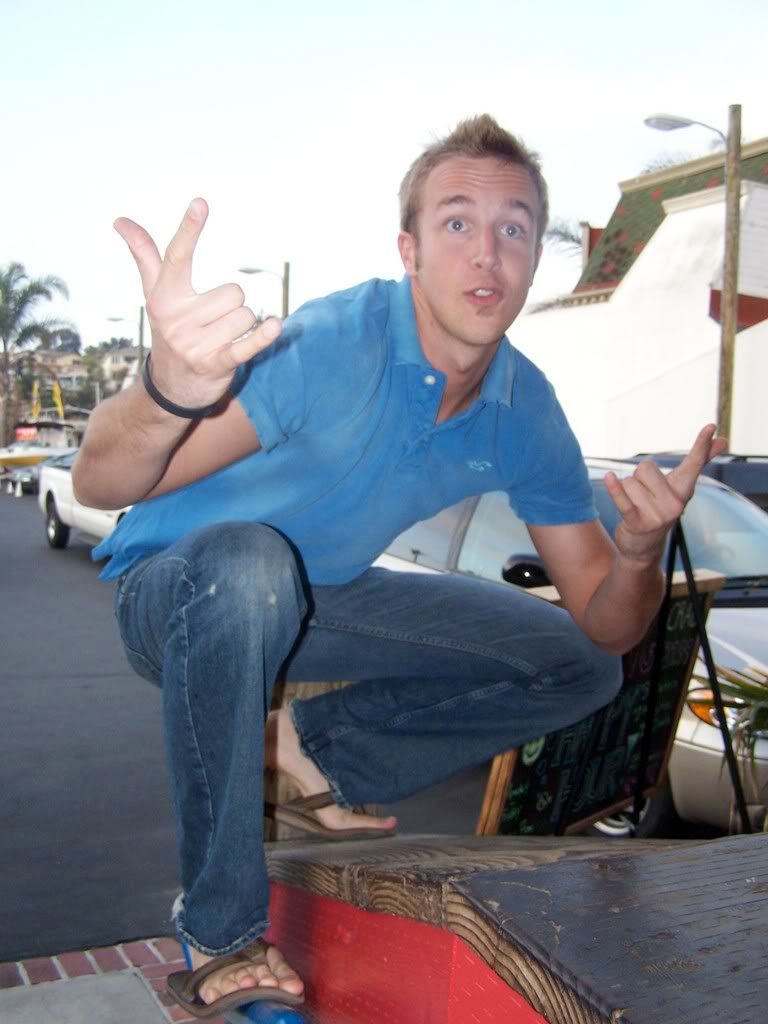
Speaking of birth, one of my best friends and his wife just had their first child. His name is Enoch, and he is as beautiful a child as I have ever seen. Let me tell you that to miss this child’s birth was difficult, I love my friend and his wife and to miss such an important occasion seemed irresponsible at best, perhaps criminal at worst. So in an attempt to rectify the situation, I was constantly skyping with my friend while he and his wife were at the hospital. I got to know the nurses as they came and went, and even serenaded Enoch with a few licks from the guitar before he was born. After 20 some hours Enoch was born, and I missed it, barely. I called my friend’s cell as I was walking out of class, and the first thing I heard was the crying of a newly born child. Enoch had been born about 30 seconds prior to me calling. I don’t know much about those things, but for some reason tears began to form in my eyes and I found myself greatly moved. Nothing was said, nothing needed to be. Something profound had happened, something that defied the narrow constrains of language and would only be cheapened by its use. For all the value we place on language, there are places that even it cannot go. There are some emotions, some chambers of the heart best left unspoken of.

So if I had to choose a phrase to describe this time, this month, this season, it would be that everything is new. Everything is becoming new, moving toward life. Even in death something new comes. Big changes are on the horizon, big news is sure to come, life is evolving each day into something more dynamic, challenging, and profound. My most sincere hope in this season is that, as I find myself in the midst of this, that I might experience each emotion deeply. I so desire to deeply experience the pathos of this time, of this place, of these situations, and in so doing evolve into who I have it in me to be. Everything is new, and hopefully, so am I.